


A Complex World Requires Radical Thinking
What We Do
-
In today’s business environment, organizations operate in conditions of growing complexity and uncertainty. Yet many leaders still rely on conventional management practices designed for a far more predictable world. These models often overlook the unique characteristics of each organization and the realities of modern competitive environments.
At Thinking Advisory, we help leaders rethink strategy and decision-making when traditional approaches fall short. Our work challenges established assumptions in management and offers new perspectives for navigating complex business landscapes.
Our mission is to equip leaders with the insights they need to understand their organization’s unique dynamics, capabilities, and opportunities. Rather than applying standardized solutions, we work closely with leadership teams to explore how their organization can think and act differently in the face of uncertainty.
Partnering with us is not simply about adapting to change. It is about developing the clarity and confidence to lead in uncertain environments, turning complexity into opportunity and building strategies that reflect the true potential of your organization.
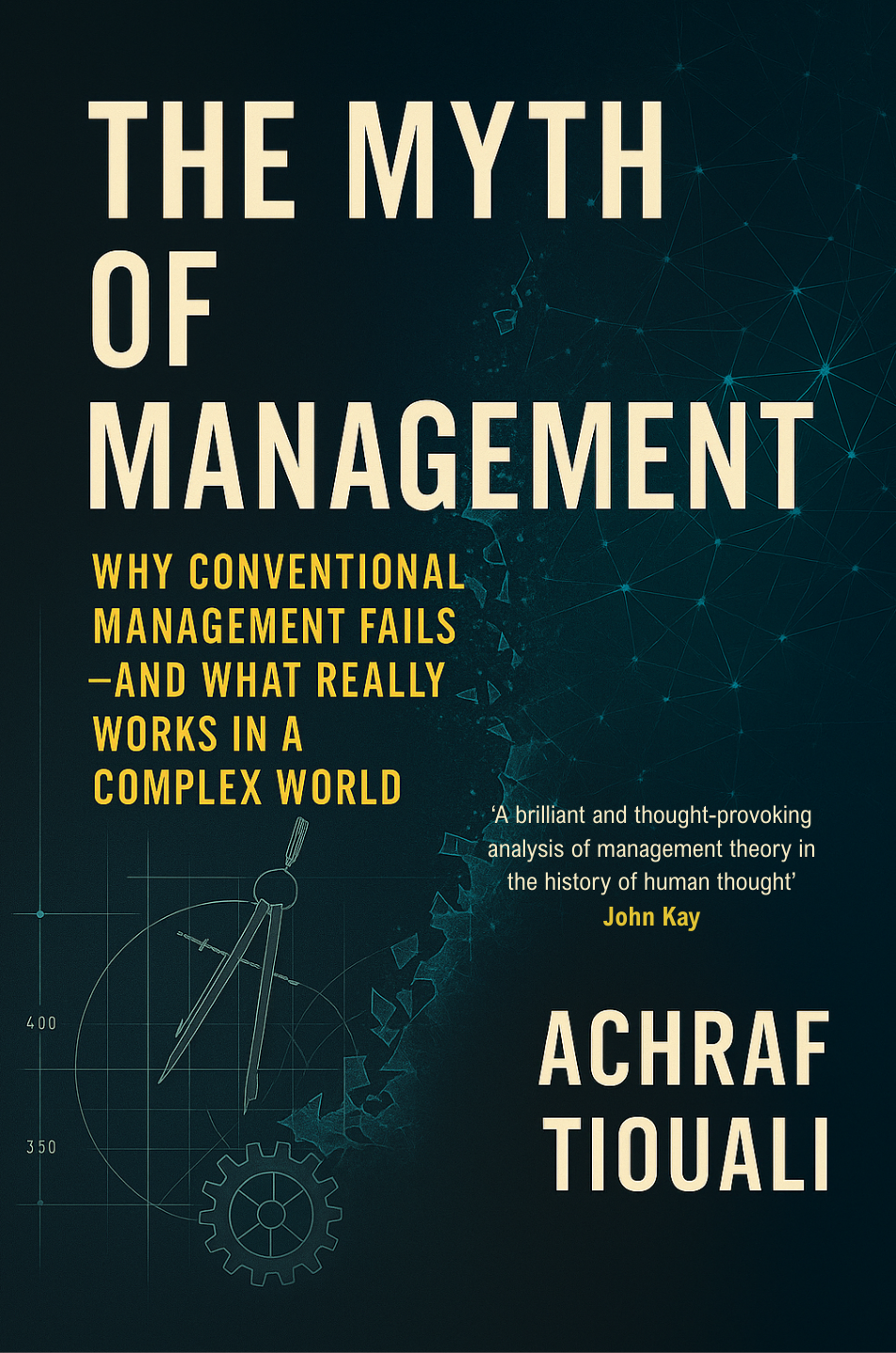
For more than a century, management has been taught and practised as if companies were machines and business success a function of correct formulas. We built a managerial religion endowed with sacred terms like strategy, engagement, and competitive advantage—and we convinced ourselves that, with enough analysis and control, outcomes would follow intention.
Yet step into any company and reality feels very different. Strategies fail despite knowledge, rationality, and coherence. Engagement programmes flourish while paradoxically causing fundamental harm to employee well-being. Unpredictability seeps into every plan. And success often appears not because of any clean causal design, but in spite of it.
Drawing on various disciplines—physics, complexity science, social sciences, history, management, computation—and the author’s own experience, the central argument of this book is simple, though uncomfortable:
Modern management is built on the wrong epistemological foundations.
You’ll discover why managers cling to coherent narratives that don’t reflect reality, why conventional practices mislead more than they guide, why success cannot be designed, and why survival and variation drive eventually success.